Profile: Gareth Capner OBE
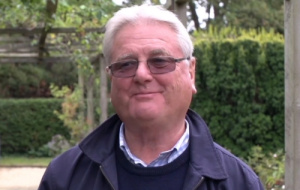
Gareth Capner OBE
Gareth Capner OBE is a friend of Univ and worked at Barton Willmore, which he developed into a planning and design practice for nearly thirty years, retiring as Senior Partner in 2008. Gareth has worked with the College on several projects over the past 25 years. He was involved in initiating the Univ North Development, providing expert advice and has also been a member of the Univ North Working Party since its creation. This year, Gareth was awarded an OBE for services to Good Quality Housing in the King’s Birthday Honours List.
What drew you to study town planning?
When I was at school, I was quite good at geography. My father was a surveyor, and he suggested I did a town planning course. At the time, in 1964, there were only two town planning courses available at undergraduate level in the UK, at The University of Manchester and Newcastle University. I applied to both but didn’t get a place at either of them. The following year, the University of Sheffield decided to run a planning course and they swept nine of us off the streets through the clearing system. They started the course in October 1965 in a vacant hall on the edge of the campus. Because of my name coming early in the alphabet, in 1968, I was the first ever graduate of Sheffield’s School of Geography and Planning, which is now a world-leading department in its field.
How did you find the course?
I didn’t really understand what I was doing for the first couple of years, and I didn’t really enjoy it. It was a very new course and our lecturers grabbed bits from other courses, so we had input from geography, engineering, architecture and even sociology – it was a bit of a ragbag.
Things shifted in my third year because, by that point, they had sorted out a more focused curriculum. After completing my initial degree, I spent a year working with the Ministry of Housing and Local Government and then went back for a master’s degree.
My qualifications gave me exemption from the professional exams of the Royal Town Planning Institute (RTPI), which is the organisation that inspects town planning courses every year. I’ve gone full circle and am now a member of the RTPI panel that accredits university planning courses.
What have been the major changes in your sector that you’ve observed?
There’s been a massive growth in complexity. In 1957, there was a planning application for a huge development near Bristol including two new ports, large amounts of warehousing – all on a sensitive wetland site. The planning application for that project consisted of an ordnance survey plan, a two-page form and a one-page statement, and that got planning permission.
Since then, I’ve made planning applications with my team where, before digitisation, we’ve delivered the documentation in a van. Applications now have a stack of documentation such as environmental impact, heritage, planning, landscape, ecological and diversity assessments. Currently, things are very complicated, and the planning system doesn’t function well. I have real sympathy for those trying to operate it in the public sector, and there are a lot of very dedicated people trying to make it work.
Another big shift has been the number of consultancies. When I joined Barton Willmore in 1979 as their first private sector planner, there were very few planning consultancies. In the 1990s and 2000s, there was significant growth in the number of planning consultancies. These days, most planning graduates go into the private sector rather than the public sector, whereas it used to be almost exclusively a public sector activity.
What sort of challenges did you face and how did you cope with them?
I moved from working at Berkshire County Council to being the first planning associate at Barton Willmore, I went from leading a team of people to working largely on my own, and when I first got there, I thought “What have I done?” I took a part-time lecturing job at Reading Technical College in case the whole thing went fell apart. That was my plan B!
At Barton Willmore, there were challenges setting up the planning function but I decided that I could succeed if I worked very hard and engaged positively with the clients. I had some great opportunities in terms of clients and one of my first clients was the housebuilder Graham Pye.
As we did more planning work, we were able to build a team, but then the challenge became running the business as well as recruiting and retaining people – trying to develop them at the same time as doing a full-time professional job. But, because of the people and the clients and the nature of the work, it was very inspiring.
How did you become involved in working with Univ?
I began my relationship with Univ in 2001. The College had bought a farm near Litchborough, Northamptonshire, in the 1940s and they had put in a planning application for 13 houses on the farmyard, which had been refused. They were recommended to appeal and to approach me, as I was well-known for working on planning appeals. I met Frank Marshall, Univ’s Estates Bursar at the time, to view the site and recommended that rather than appeal, they expand their plans, as I thought they could do better than 13 houses.
Litchborough was a conservation village and the village needed to know what they were getting. I advised Frank to team up with a house builder such as Graham Pye, who was a supporter of Univ, and put in an application together so that it would be detailed and the residents of the village would know what to expect from the project. Then Frank, Graham and I developed the scheme and began negotiations. After quite some time, we got planning permission, not for 13 houses but for 30. Graham Pye then bought the land from Univ and the houses. As part of that plan, we also built a brand new hall for the village in exchange for their old village hall site, on which new houses were built.
Following that first project, Barton Willmore had a number of other involvements with the College, such as the renewal of the Goodhart Building, the Buttery, and the College Boathouse, which won a local design award through the Oxford Preservation Trust.
You’ve been involved in the Univ North development since its inception. What do you think of the work that’s being done there?
Niall McLaughlin, a Stirling Prize-winning architect, came up with a beautiful design, and it’s being well-delivered. SDC, who are the builders are really good builders. Their brickwork is excellent and they run their site really well. The Univ North development has met all expectations and has already won a design award, which will I believe will be the first of many.
What aspect of the Univ North development do you find most exciting?
The intergenerational aspect is really important – the fact that you’ve got a mix of uses, with students, the nursery and the relationship with Fairfield Residential Home. I think there are ways of increasing the physical relationship between Univ North and Fairfield, which I’ve talked through with the team and I hope will be delivered.
Why do you support Univ?
The Masters that you’ve had, Sir Ivor Crewe and now Baroness Valerie Amos, are just great leaders, and that is why I’m a friend of Univ. Although I initially had a professional relationship with the College, since I retired in 2008 my wife and I have supported the College because Univ is such a special place. We supported a disabled access room in the Goodhart Building, and we’re also supporting a disabled access room in Univ North.
Univ is this special community that’s committed to a collegiate approach and excellence – so I think it’s well worth supporting.
How would you describe Univ in three words?
Two – Rolls Royce.
Published: 2 October 2025
Explore Univ on social media