Body movements as biomarkers

Dr Connor Keating
A new approach to autism screening
Many years ago, while volunteering for an autism charity, I noticed something intriguing: lots of the autistic people I was working with seemed to move their bodies in a way that was slightly different from neurotypical people. Although I could not quite put my finger on exactly what was different, their movements appeared slightly less smooth. This surprised me; although I had read and learned extensively about the social characteristics of autism, I was unaware of any movement differences.
Since then, a growing body of evidence has shown that certain movement differences are highly common in autism – appearing very early in development and continuing throughout life – and specific to autistic people. That is, these distinctive movement patterns are not observed in neurotypical individuals, people with ADHD or dyspraxia, or those with other movement related conditions.
Contributing to this evidence base, during my PhD, my previous lab comprehensively characterised and compared the arm and face movements of autistic and non-autistic adults, discovering striking differences. For instance, using a task in which participants trace different shapes, my colleagues found that autistic adults display a different drawing style; they more dramatically reduce their speed when encountering the curved parts of shapes. These autistic participants also moved their arm in a less smooth, more jerky fashion when tracing certain shapes, confirming my observations from many years ago.
In another study, we employed motion capture technology to track facial movements. Here, we uncovered further evidence supporting our earlier observations: when prompted to express anger, autistic adults exhibited much more jerky mouth movements than their nonautistic peers. We also found that, when producing a happy expression, the autistic adults tended to display less exaggerated smiles that also did not reach the eyes.
In both recent studies, the specific movement atypicalities we identified in the autistic participants were highly prevalent and pronounced. This raises an exciting possibility; these particular movement features could serve as valuable indicators of autism, potentially enhancing current screening tools.
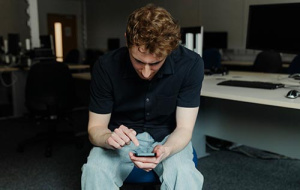
Dr Connor Keating
Current screening tools lack precision: around 85% of those flagged as suspected cases of autism do not ultimately receive a diagnosis. This over-identification leads to vast numbers of autism-related referrals to healthcare services every year, causing huge downstream costs and delays in diagnoses. These delays have escalated to such an extent that there are now more than 200,000 people waiting for an autism assessment in England alone – an increase of 27% from last year – and the average wait for an autism assessment is between three and three and a half years. To make matters worse, existing screening tools prove even less effective for girls and children of colour, leading to disparities in access to, and further delays in autism diagnoses for these groups. These prolonged waiting periods can have serious consequences. Without timely support, individuals face increased risk of mental health issues, suicidality, and abuse. These critical issues have led the NHS and autism community to call for more accurate, unbiased and scalable screening tools, thus enabling earlier support for autistic people and their families, ultimately improving outcomes and quality of life.

Seaweed City smartphone game
In response to these calls, recently, we trained machine-learning classifiers on the most common movement atypicalities seen in autistic people and then assessed how well the classifier could separate autistic from non-autistic adults. Our results are remarkably promising: the classifier achieved exceptional accuracy (92%) and precision (89%). Put simply, our algorithm correctly classified 92% of participants, and when it predicted someone was autistic, it was right 89% of the time – a significant improvement over existing tools with 15% precision which wrongly flag potential cases 85% of the time. Importantly, our classifier proved highly effective across diverse subgroups, delivering 95% accuracy for women and 100% accuracy for Asian and Black individuals. These results suggest that movement atypicalities could serve as powerful, unbiased indicators of autism, enabling earlier identification and support for people from all backgrounds. But so far, our work has focused on the movements of adults. If we want to facilitate early identification of autism, it is important to examine the movements of children.
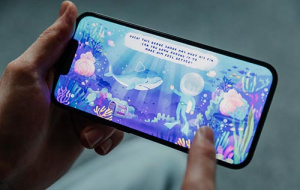
Seaweed City smartphone game
Therefore, as part of my Scott Family Junior Research Fellowship in Autism, we are now developing child-friendly smartphone games that allow us to capture arm and face movements. Our first game, “Seaweed City” immerses participants in an underwater world populated by poorly sea creatures. Players must trace various shapes to rescue each of them – for instance, drawing round a shark’s fin to bandage it with seaweed, or tracing a jellyfish to restore its colour. In our second game, “EmoTopia”, participants enter a magical world where a wizard has stolen the inhabitants’ emotions. To help the characters “feel again”, players must travel through different lands, and demonstrate facial expressions of anger, happiness, and sadness.
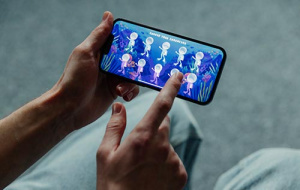
Seaweed City smartphone game
With our digital worlds now taking shape, we are almost ready to get feedback from the true experts: autistic and nonautistic children. Their insights will prepare us for our next exciting step – inviting many autistic, other neurodivergent, and neurotypical children to play our games, creating a rich database of movement profiles. With each swipe and smile captured, we will be one step closer to understanding movement differences between these groups, and to building classifiers to identify autism in children. If successful, these smartphone games could provide a more accurate and equitable method of identifying autism, reducing unnecessary referrals and diagnostic delays, and enabling timely support for autistic people and their families. Watch this space for updates!
Dr Connor Keating, Scott Family Junior Research Fellow in Autism, Department of Experimental
Psychology, University of Oxford, Co-founder of the U21 Autism Research Network
Former Scott Family Junior Research Fellows having an impact
Edward W Scott Jr (1960, PPE), who serves on the Chancellor’s Court of Benefactors of the University of Oxford, endowed a Chair in Psychiatry and two research fellowships dedicated to the study of the causes and possible treatments of autism spectrum disorders at Oxford – one of which is the Scott Family Junior Research Fellowship in Autism and Related Disorders at University College. The Scott Family Junior Research Fellowship has played a key part in the early research and development of many academics in the field of autism research. Univ is proud to highlight a few of them here.
Dr Alexandra Hendry

Dr Cathy Manning

Professor Anna Remington

Professor Andrew Whitehouse
Professor Liz Pellicano

This feature was adapted from one first published in Issue 17 of The Martlet; read the full magazine here or explore our back catalogue of Martlets below:




Explore Univ on social media