

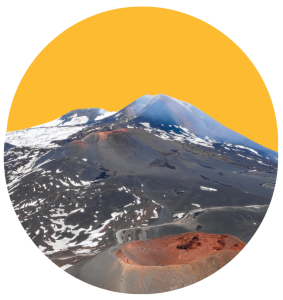
Earth Sciences is a fascinating subject that covers diverse topics such as climate change, the origins of life, and the composition of our planet, including its glaciers and volcanoes. Studying Earth Sciences allows you to explore fundamental questions about the origin, development, and future of planet Earth. At Oxford, the course combines knowledge from physics, chemistry and biology with geology, geography and palaeontology. There is an emphasis on Geology in first year, and afterwards you can pursue your specific interests from a wide range of options such as Plate Tectonics, Paleobiology and Climate Science. The course is taught through lectures, classes and tutorials, and also involves fieldwork. You will be assessed through a mix of exams and practical, take-home coursework.
Earth Scientists at Univ form a very supportive and tight-knit community. Univ tutors value the importance of fieldwork very highly, and several academic fieldtrips are typically scheduled throughout the course of a student’s time at the College – the College has a generous array of study grants to ensure that all students are able to take part in these activities. We have thought carefully about how to accommodate those with accessibility needs on fieldwork trips to ensure everyone can take part. There is also a specific Earth Science society in the College, Sollas, which arranges social events throughout the year for all Univ Earth Scientists.
What our Tutors Say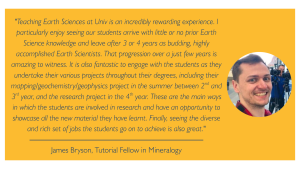
Resources
If you are considering applying for Earth Sciences, a number of resources you might find useful to explore beyond the school curriculum can be found on Univ’s Staircase12 pages, including the Reading Bank and Resource Hub.
Also listen to Univ’s Tamsin Mather on BBC Radio 4’s The Life Scientific and on the BBC World Service’s The Forum The Unpredictable Planet: Understanding Volcanoes and Earthquakes